PUBG: Battlegrounds Beginner's Guide: Looting, Rotations, and Survival
A thorough beginner's guide to PUBG: Battlegrounds covering drop strategy, looting priorities, circle rotations, and performance tuning.
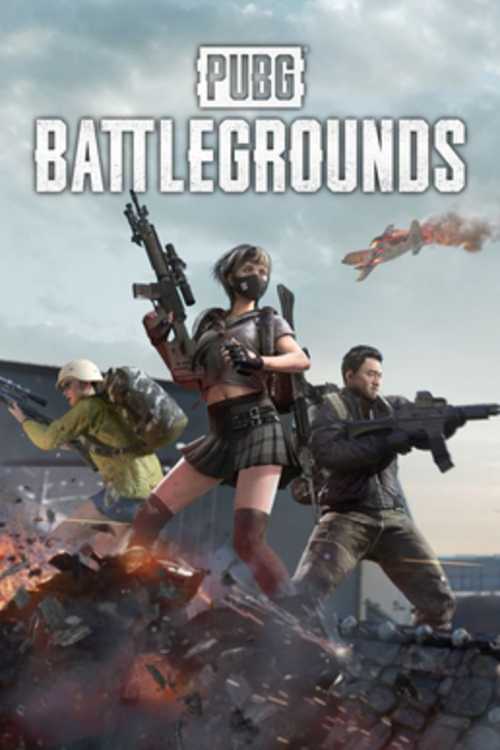
PUBG: Battlegrounds helped define the modern battle royale genre and still holds the individual concurrent player record for a single game on Steam. Its slower, more tactical pace compared to newer battle royales can take some adjustment for players coming from Fortnite, Apex, or Warzone — and its mechanics are punishing in ways those games aren't.
PUBG vs. Other Battle Royales
PUBG is harder and more unforgiving than most alternatives, and understanding why helps you adjust your expectations and strategy:
One-shot mechanics are real. A bolt-action rifle headshot is an instant down from any distance, at any armor level. In Fortnite or Apex, you can take a few headshots and keep moving. In PUBG, positioning mistakes are fatal immediately.
Bullet drop and travel time. PUBG simulates ballistics. At 300 meters, your bullets take real time to reach the target and drop several meters below your crosshair. Every other popular battle royale uses hitscan (instant-travel bullets). If you're missing every long-range shot, this is why.
Longer time-to-kill at medium range. A 5.56 AR like the M416 takes 4-5 body shots to down a Level 2 vest player. This is intentional — it means good movement can save you from a fight you're losing. In Apex, Warzone, or Fortnite, poor-health fights usually end quickly regardless of movement. In PUBG, circle-strafing and cover-use actually save lives.
No revive in solos. If you're dead, you're in the lobby. Every decision carries permanent consequences. This is the core of why PUBG rewards patience.
Landing and Looting Strategy
Where you drop determines your first five minutes more than anything else. PUBG's map (Erangel especially) has a few notorious hot zones that new players should avoid:
Avoid Pochinki and Military Base on Erangel early. These are high-loot but consistently the most contested drops on every map. If 30 players land near Military Base, 20 of them are dead before the first circle closes. The loot doesn't matter if you die to fists.
Small towns and farms outside the flight path are the sweet spot. You'll find enough guns and armor to compete, you'll spend 3-4 minutes looting without gunfire, and you'll have time to form a plan before the circle forces action.
What to loot in order:
- Any gun that uses common ammo (5.56 or 7.62) — find one before worrying about anything else
- Level 2 vest and helmet — these dramatically increase your survivability
- Backpack (Level 2 or 3 if you find it) — more slots means more ammo and healing
- Healing: bandages, first aid kits, medkits, and energy drinks — always carry more than you think you need
- Attachments: scope first (even a 2x makes a meaningful difference), then suppressor if available
Weapon Tier List for Beginners
PUBG has over 30 weapons and most beginners grab whatever they find. Here's what to actually prioritize:
ARs — the M416 is the best all-around beginner weapon. It accepts the most attachments of any AR, has manageable recoil, and works at every range from 50 to 300 meters. If you find one, use it as your primary until late game. The SCAR-L is a close second. The AKM hits harder but kicks harder — harder to control under pressure.
Snipers and DMRs: Avoid bolt-actions (Kar98, M24, AWM) as a beginner. The required lead time and bullet drop is a skill in itself that takes dozens of hours to develop. The SKS is far better for beginners — it's semi-auto, so you can follow up missed shots, and it's effective from 100-400m with a 4x or 6x scope.
Shotguns: The S12K (semi-auto shotgun) is actually viable inside buildings. The pump shotguns (S686, S1897) are high-risk, high-reward but require near-perfect shot placement to work.
SMGs: The UMP45 and Vector are excellent for early-game loot situations when you don't have an AR yet. Don't carry one late game unless you have something else for range.
Bullet Drop and Zeroing
At close range (under 100m), aim directly at center mass and shoot. At medium range (100-250m), you need to understand zeroing and compensate for drop.
Zeroing is accessed by holding the right-click scope and pressing Page Up/Down. Most players zero to 200m by default for their AR. At 200m zero, aim slightly above center mass on a standing target. At 300m, aim at the top of their head. At 400m+, aim above the head.
Leading moving targets: A player sprinting sideways at 200m will move 2-3 body-widths by the time your bullet arrives. Lead them by that much ahead of their direction. This is something you develop through repetition, not calculation.
The practical advice: don't take shots you can't win at long range. Sneak into cover, reduce the distance, and take the fight on your terms.
Vehicles — When to Use Them
Vehicles are a double-edged tool in PUBG. They're loud enough to be heard from 200+ meters, and players frequently ambush vehicle users.
Use vehicles: when the circle is far and you need to cover 1km+ of open terrain quickly. Standing still while the blue zone catches you is how most players die in the mid-game. A 30-second risky drive beats a 90-second slow jog through blue damage.
Don't use vehicles: when you're within 300m of other players who haven't spotted you yet. The engine noise reveals your position, direction, and speed instantly. Get out and go on foot for final circle rotations.
A good rule: use vehicles to get to the circle edge, then ditch the car outside and approach on foot.
Blue Zone Mechanics
The blue zone (also called the circle or safe zone boundary) deals damage that accelerates with each phase. In Phase 1, it deals roughly 1 HP per second — annoying but survivable. By Phase 6 or 7, it kills a full-health player in under 10 seconds.
Always start moving before the phase closes, not when it does. Players who wait until the last second frequently die to the blue because they misjudge the travel distance to safe ground or get ambushed while rotating under time pressure.
Energy drinks and painkillers give you a HP regeneration buff that can partially counteract early blue zone damage — useful for buying extra seconds if you're caught in late-phase blue.
Sound as a Weapon
PUBG's directional audio is one of its most important mechanics, and most new players treat it as background noise.
Footsteps tell you exact location. Crouching reduces your footstep volume significantly. Walking (hold Ctrl) is near-silent at 30+ meters. Sprinting is audible from 80+ meters. Learn to sprint less when you suspect players are nearby.
Weapon audio identifies guns. The AKM has a distinct, heavy crack. The M416 has a faster, lighter sound. A suppressed weapon sounds markedly different from an unsuppressed one. After 20-30 hours, you'll recognize when a firefight nearby involves bolt-actions (meaning there are snipers and the target may not know where the shots are coming from) versus ARs (a close, active fight).
Vehicle direction: You can tell from audio roughly which direction a vehicle is coming from and whether it's getting closer or farther. Don't ignore vehicle sounds — a car approaching usually means players, not a ghost.
Common Beginner Mistakes
Looting too long. The most common death in early-game PUBG is looting so long you don't notice the circle closing or another squad looting the building next to you. Loot fast, pick a direction, leave.
Not healing after every fight. Every fight in PUBG leaves you at reduced HP unless you heal. Stop in cover immediately after a fight, use a first aid kit or medkit, top off. A player who fights at 60 HP dies to a fight they'd win at 100.
Driving carelessly. Driving in a straight line across open ground while other players are alive is how you catch a sniper round to the head. Swerve, use terrain for cover, don't treat the car as invincible.
Not checking behind you. PUBG's third-person mode (in third-person servers) lets you see over and around cover without exposing yourself. New players often forget they can peek corners and over hills by leaning the camera, not their character.
Ignoring the minimap. The minimap shows you the safe zone, the blue zone boundary, and any marked locations. Check it every 30-60 seconds during rotations. Many beginners die to the blue because they lost track of its position while looting.
For system-level performance, PUBG is demanding on both CPU and GPU. See how to increase FPS on Windows for tuning steps, and why your gaming PC is overheating if performance degrades during long matches.
Marcus Webb
Hands-on PC builder and gaming hardware writer at GameInfoZone. Focused on practical, no-hype advice for everyday gamers.
Need Help With Your Gaming Setup?
From custom builds to fixing low FPS and lag, our techs can help you get the most out of your gaming PC.
Request Gaming PC HelpGet Gaming Deals & Setup Tips
Join the GameInfoZone newsletter for gaming gear deals, PC build tips, and performance guides.
Related Articles

Valorant Beginner's Guide: Agents, Roles, and Core Strategy
A thorough beginner's guide to Valorant covering agent roles, economy basics, ability usage, and performance tuning.
Stardew Valley Beginner's Guide: Farm Layout, Early Priorities, and Time Management
A thorough beginner's guide to Stardew Valley covering farm layout choices, early-game priorities, time management, and core systems.

Rocket League Beginner's Guide: Car Control, Positioning, and Boost Management
A thorough beginner's guide to Rocket League covering car control basics, positioning, boost management, and performance tuning.